

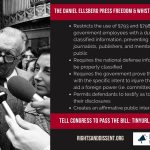
Rep. Rashida Tlaib Introduces Landmark Espionage Act Reform: The Daniel Ellsberg Press Freedom & Whistleblower Protection Act
March 19, 2026
Newsletter: April 2026
April 1, 2026Chip Gibbons Joins Historic WikiLeaks Symposium

Defending Rights & Dissent Policy Director Chip Gibbons was in Berlin last week to address an international symposium on the impact and importance of WikiLeaks’ revelations. Gibbons joined Stella Assange, WikiLeaks’ Editor-in-Chief Kristinn Hrafnsson, CIA whistleblower John Kiriakou, and others at the Exposing Crimes is Not a Crime conference as both a panelist and moderator. The confab addressed the political and media landscape that paved the way for the transparency outlet’s groundbreaking journalism and the ramifications of its releases on the War on Terror, investigative journalism, and democratic accountability.
First, Gibbons joined a panel discussion on ‘The Reasons Behind,’ looking at the motivations behind WikiLeaks’ formation and the culture of secrecy the organization sought to change. Chip was joined by Stella Assange, wife of WikiLeaks’ publisher Julian Assange, as well as Sunna Ævarsdóttir, director of Courage International; and Renata Avila Pinto, a human rights lawyer.
Gibbons discussed the impact of the Iraq and Afghan War Logs that WikiLeaks released on both the public’s understanding of the U.S. war on terror as well as its impact on our understanding of what journalism can achieve. As the discussion turned to governmental efforts to repress these kinds of exposures, Chip explained how the Espionage Act evolved from a tool to silence political dissent to a weapon to silence whistleblowers and even the press who publish their disclosures.
Watch the panel here:
Later in the conference, Gibbons moderated a panel on Intelligence and Cybersurveillance, featuring U.S. and UK intelligence whistleblowers Terry Albury, a former FBI counterterrorism agent who exposed abusive FBI surveillance practices, Thomas Drake,a former NSA senior executive who exposed warrantless surveillance, Katharine Gun, who as an employee at the UK’s Government Communications Headquarters leaked to the Observer a top-secret NSA memo about spying UN diplomats in order to gain support for the Iraq War, as well as Andy Müller-Maguhn of the Wau Holland Foundation, himself a victim of surveillance.
Albury, Drake, and Gun each explained why they chose to become whistleblowers, and Müller-Maguhn discussed the personal impact of being spied on. The panelists detailed the lengths the government went to in order to punish them, and they highlighted the urgent need for better protections for whistleblowers so that more conscientious people can come forward today.
Watch that panel here:
Find all panel discussions from the conference here.
MEET OUR SPEAKERS: Chip Gibbons is a constitutional law expert, journalist, and researcher focused on the US national security state. Chip Gibbons will speak in our conference “Exposing Crimes is not a Crime” this coming March 19-20. pic.twitter.com/Rg0X4ETdup
— Disruption Network Lab (@disruptberlin) March 17, 2026


