With 4,500 cops on the ground for the RNC, Milwaukee created a volatile situation for protest
July 18, 2024
Statement on Benjamin Netanyahu’s attacks on the First Amendment
July 25, 2024The House Ed Committee v. Student Protest
The school year is over, but with elections coming this fall, the House Committee on Education and the Workforce is unlikely to slow its crusade against campus activism. Protecting students, after all, was never the goal.
Since students began protesting against Israel’s invasion of Gaza, the Committee has been on overdrive, running a McCarthyite campaign to vilify, undermine, and shut down the protests. In order to punish the students, they have gone after the school administrators, the organizations that have supported the protests, and the philanthropic foundations that support those organizations.
They’ve issued 70 press releases (averaging two per week), held six hearings, launched seven investigations, issued 19 demand letters, compelled 13 school administrators to either testify in public or submit to ‘transcribed interviews’ or depositions, and issued one subpoena.
The Chair of the Committee, Rep. Virginia Foxx (R-NC), and her sidekick, Rep. Burgess Owens (R-UT) cynically label as “antisemitic” any activity or words that admit to the humanity of Palestinians, call for a ceasefire, or seek to hold Israel accountable for civilian deaths or genocide. They have also accused student groups and academics of supporting terrorism or getting funding from foreign governments. And they blame it all on the “lock-step discipleship behind woke policies and politics.” They continued, “Sadly, the university system has been captured by anti-American and illiberal ideology that is developing and feeding a hatred of Jews.”
When student groups announced a Day of Resistance consisting of protests and teach-ins in response to the bombardment of Gaza, Foxx and Owens immediately denounced them as antisemitic. Conflating criticism of Israel with denial of the right of Jews to exist, Foxx announced her committee would hold a hearing “to investigate antisemitism on campus and the response to that antisemitism by cowardly campus leadership.” By “antisemitism,” Foxx of course meant protests and statements in support of Palestine.
Many hearings and investigations have followed. The first, “Confronting the Scourge of Antisemitism on Campus,” was held by the Higher Education and Workforce Development Subcommittee on November 14, 2023, and was chaired by Rep. Owens. His premise and framing was to blame the post-Oct. 7 protests and any antisemitism on DEI (Diversity, Equity, and Inclusion) initiatives. But it was the following hearing that grabbed the headlines and put college administrators on notice that silencing pro-Palestine protests and viewpoints on campus would be essential to their survival.
On December 5, the full committee summoned the Presidents of Harvard, MIT, and UPenn to Capitol Hill. Campus protests calling for a ceasefire were categorically proclaimed to be antisemitic, and the administrators were lambasted for allowing students to raise their voices for Palestine. Within weeks, two of the presidents were forced to resign.
“This moment is truly a watershed moment, as Congress has successfully asserted the power to oust senior leaders at any institution and force governance reform,” said Peter Lake, a law professor at Stetson University and expert in higher education, told Inside Higher Ed. “The success of this political maneuver may embolden Congress to continue down this path; state legislatures may follow. This feels like the beginning of something, not the end.”
It was, indeed, the beginning of something. In subsequent weeks and months, the committee subpoenaed Harvard, launched investigations into ten different schools, and issued a dozen more demand letters seeking information from schools about First Amendment-protected activities.
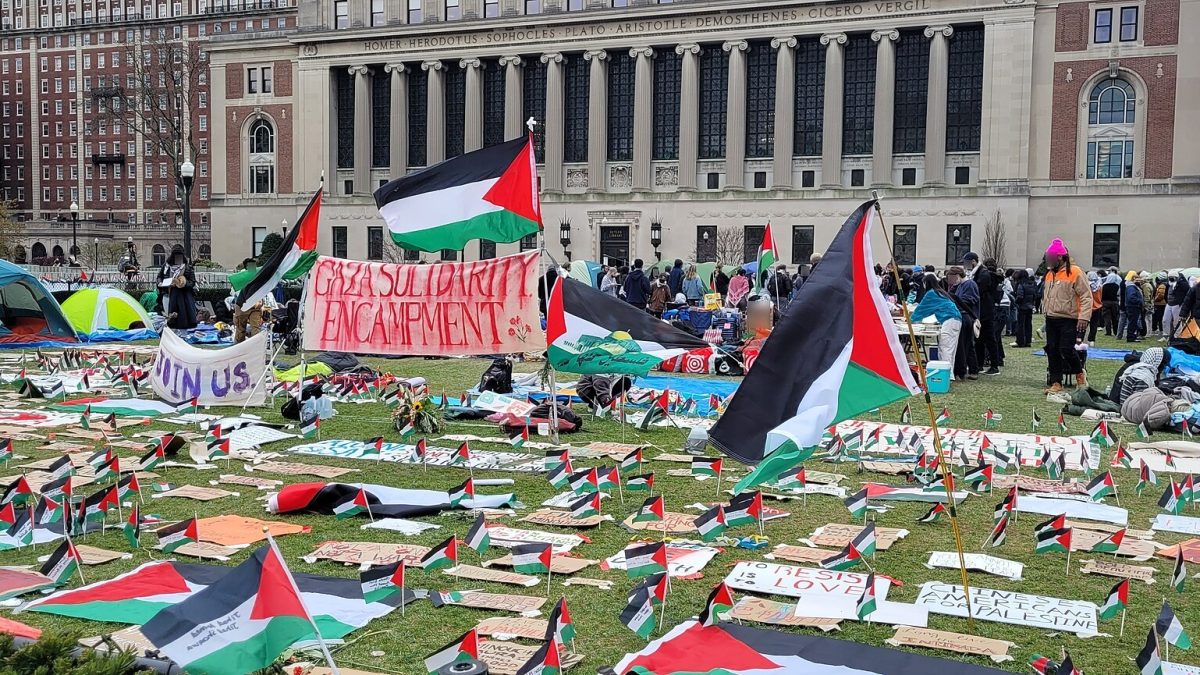
Then, in April, students at Columbia created an encampment. It’s an old tactic on college campuses, harkening back to the anti-Vietnam war and anti-apartheid movements. Despite overwhelming evidence that the encampment was entirely peaceful, Foxx hyperbolically and falsely declared to the media that “the pro-Hamas Gaza Solidarity Encampment has plunged Columbia’s campus into chaos and endangered its students.”
Columbia was already on her target list – in February the Committee began investigating the school, and the day the encampment started, the President and two members of the Board of Trustees were already slated to be in DC for a hearing before Foxx’s committee.
Columbia succumbed to the Committee’s pressure. In her testimony before the Committee on April 17, the University’s President, Monouche Safik, proudly reported that she had reported her students to the FBI for the act of hosting a teach-in, and, when asked about the political views of certain professors, she threw “academic freedom and Columbia University faculty under the bus.” Most egregiously, the day after the hearing, she called in the NYPD to break up the encampment on campus in a clear effort to appease the Committee and others. Over 100 students were arrested. Defending Rights & Dissent sent her a letter condemning her actions and calling on her to take steps to restore First Amendment rights on the Columbia campus.
But the spread of student encampments to campuses across the country drove Foxx crazy. She called on colleges and universities to shut them down without regard to the rights of the students. When the D.C. police declined to shut down an encampment on the campus of George Washington University, Foxx teamed up with the Chair of the House Oversight Committee to demand answers from D.C.’s Mayor. The standoff lasted a week, but in the end, Mayor Bowser folded to congressional pressure and ordered police to clear the encampment.
The committee summoned Northwestern, UCLA, and Rutgers’ “mealy-mouthed, spineless college leaders” to testify at another hearing titled, “Calling for Accountability: Stopping Antisemitic College Chaos.” Leaders of Yale, and University of Michigan were also required to submit to “transcribed interviews.”
At the hearing, Foxx demanded to know how many students had been suspended, and how many faculty dismissed, as a result of the protests. Dissatisfied that not enough heads had rolled, she warned the three, “today’s hearing is the beginning, not the end of the Committee’s investigation of your institutions.” She pointedly targeted the Center on Security, Race and Rights at Rutgers for vilification. Prior to the hearing, Defending Rights & Dissent organized a coalition response to the Committee’s demand for Rutgers documents pertaining to the Center. Along with 29 other organizations, we called upon Rep. Foxx and her committee to end their unconstitutional investigation into First Amendment-protected activities. The investigation, we charged, was “nothing more than harassment, intimidation, and an attempt to silence speech with which they [committee members] disagree.”
The efforts of the Committee have certainly resulted in some cowed administrators unwilling to stand up for their students, but the students have not been silenced. It’s crucial to understand that the committee is not sincerely concerned about antisemitism, but are cynically weaponizing it to protect Israel, and to undermine DEI efforts.
This becomes clear when we look at the targets of their investigations. While there have been large pro-peace, pro-Palestine protests at over 500 campuses, and multiple day encampments at over 100, the committee has centered their investigations on elite, well-known schools. As Isaac Kamola, an associate professor of political science at Trinity College and director of the American Association of University Professors Center for the Defense of Academic Freedom explained to Inside Higher Ed, “It’s a very clear strategy of targeting those institutions where you are going to have the greatest amount of bang for your buck because, again, this is all theater. This is not an earnest inquiry. If you’re performing political theater, you want to be taking on those institutions where that show is going to be a big act.”